What Reinforcements Can be Used for Modified Bitumen Roofing?
Jun. 30, 2026

Selecting the right modified bitumen membrane starts with understanding the reinforcement. In SBS modified bitumen roofing, the reinforcement plays a key role in physical properties such as tensile strength, tear strength, elongation, dimensional stability and thickness. JM’s SBS portfolio includes fiberglass, polyester and composite-reinforced options, giving specifiers and contractors flexibility to align membrane selection with system design, application method and project requirements.
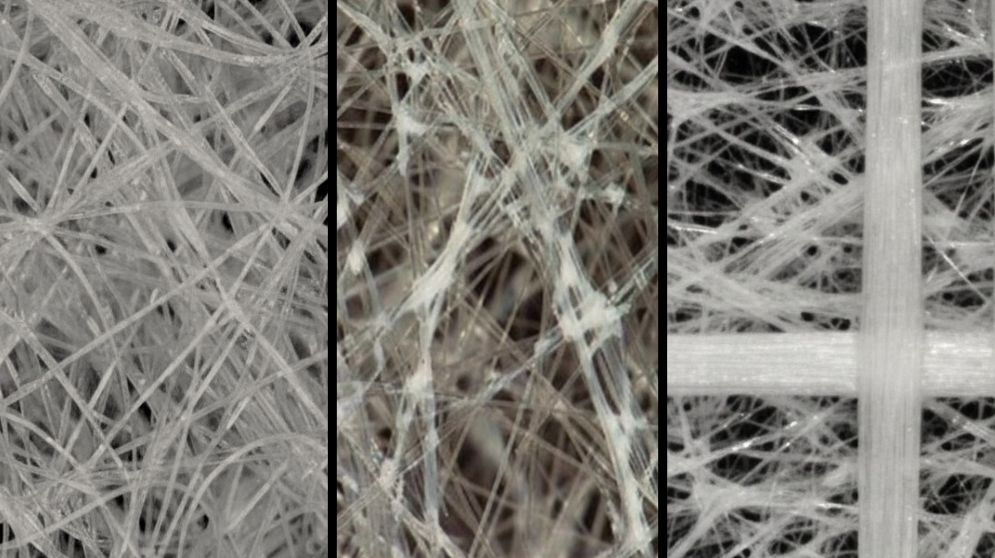
Fiberglass-reinforced SBS membranes, such as JM's DynaBase® or DynaGlas® FR, are commonly associated with excellent dimensional stability and tensile strength. This can make fiberglass a practical option in multi-ply systems that utilize hot asphalt, where membrane stability and lay-flat characteristics are important considerations.
Polyester reinforcements are commonly associated with strength, flexibility and tear resistance. JM polyester-reinforced products, such as DynaLastic® 180 S or DynaLastic® 250 FR, are reinforced with glass yarns to offer excellent tear resistance and flexibility for field or flashing applications. Polyester-reinforced SBS membranes are a great option when elongation or membrane toughness are key performance considerations.
Composite reinforcements combine fiberglass and polyester characteristics within the membrane reinforcement mat. JM composite reinforcements combine the toughness and puncture resistance of polyester with the superior tensile, dimensional stability and lay-flat characteristics of fiberglass. This makes composite reinforcement a useful option when a project calls for a premium option with both stability and toughness in a single SBS membrane.
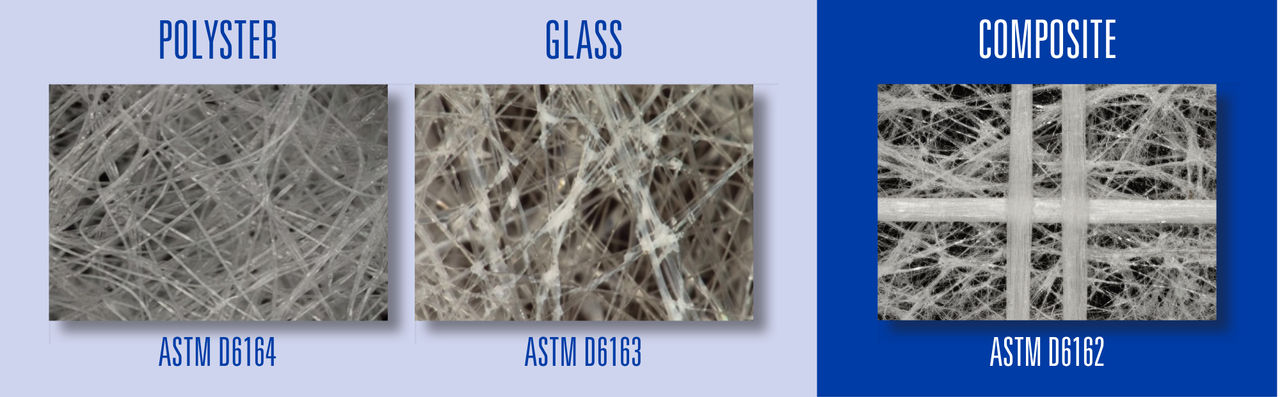
SBS membranes are commonly categorized by reinforcement type under three ASTM standards: fiberglass-reinforced membranes fall under ASTM D6163, polyester-reinforced membranes fall under ASTM D6164, and composite-reinforced membranes fall under ASTM D6162. Within those standards, different Types and Grades define minimum physical property requirements. All 3 of these standards rely on ASTM D5147 test methods to evaluate performance characteristics such as tensile strength, tear strength, elongation and dimensional stability, which allows for comparison across multiple SBS ASTMs. Some membranes may be classified under one ASTM standard due to the reinforcement used but also meet or exceed the physical properties of other standards. Learn more about ASTM D6162 Type III membranes.
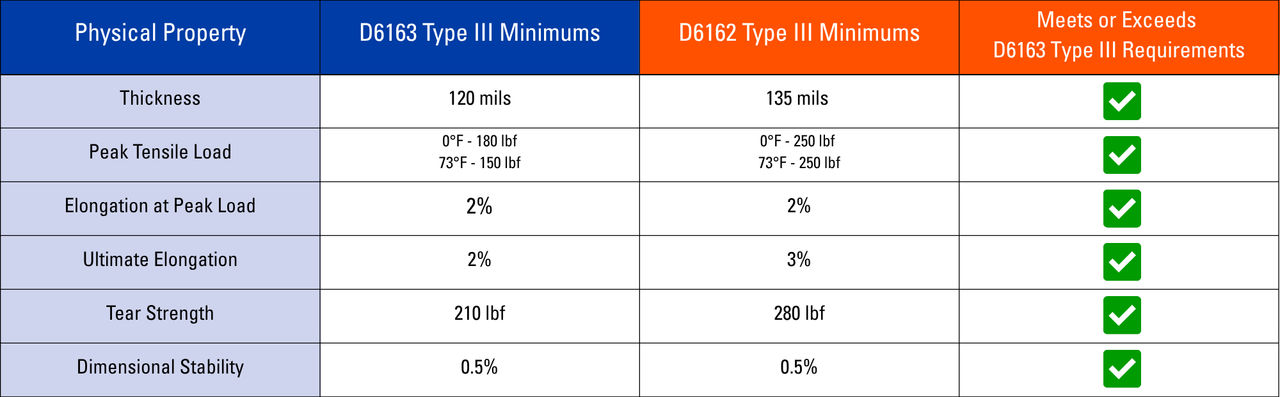
JM SBS systems are engineered for customization, with fiberglass, polyester and composite reinforcements available across a broad product line. JM SBS membranes can be used with multiple application methods, including hot applied, cold applied, heat welded, self-adhered and mechanically fastened applications. JM also offers several SBS membranes that meet or exceed ASTM D6162 Type III requirements, including DynaMaxTM FR base and cap sheet options. See our SBS Solutions Brochure for more information.
What should contractors or specifiers review before selecting a reinforcement type?
Contractors and specifiers should review the project’s roof system requirements, application method, membrane function, applicable ASTM classification and product data before selecting a reinforcement type. Fiberglass, polyester and composite reinforcements each have different physical properties, so the appropriate option should be evaluated as part of the overall roof assembly and project requirements.
JM’s Specifier Services Team is here to help you navigate specifications and system requirements, providing dedicated design support services; please reach out to rsspecservices@jm.com.
Why might a specifier consider a composite-reinforced SBS membrane?
A specifier may consider a composite-reinforced SBS membrane when premium performance is a critical requirement. Composite reinforcements are designed to incorporate attributes associated with polyester, such as tear strength, toughness and puncture resistance, along with attributes associated with fiberglass, such as elevated tensile strength, dimensional stability and lay-flat characteristics.
Are JM composite SBS membranes available as base and cap sheets?
Yes. JM’s DynaPly® T1 and DynaKap® FR T1 options meet or exceed ASTM D6162 Type I requirements, and JM’s DynaMaxTM FR base sheet and cap sheet options offer the highest tensile and tear properties in JM’s SBS portfolio, meeting or exceeding ASTM D6162 Type III requirements.
This article is for informational and educational purposes only and does not constitute engineering, design, or application advice. Results may vary based on conditions beyond Johns Manville’s control, and JM makes no warranties as to the accuracy, completeness, or suitability of the information.