Polyiso insulation: a clear winner over XPS
Dec. 17, 2025
by Kristen White

High R-value, moisture resistance, compressive strength, excellent fire test performance – the list of polyiso insulation’s benefits go on and on. But perhaps you’ve heard of Extruded Polystyrene insulation (XPS) and wonder about it as an alternative?
Wonder no more. Polyiso is superior for many reasons, and we’ve got the data to back it up.
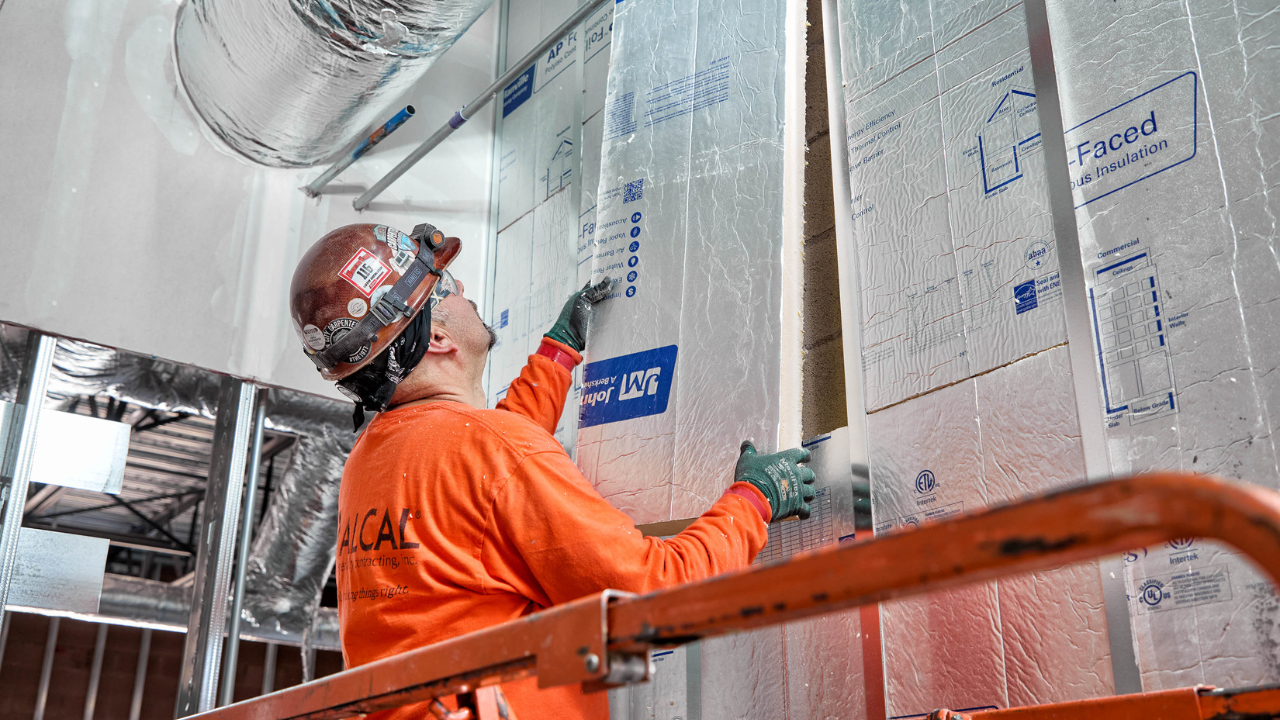
Polyiso insulation, like Johns Manville’s AP™ Foil, is a rigid foam continuous insulation solution designed for commercial and residential wall assemblies. It is one of the most widely used and readily available building products in North America and is a cost-effective insulation option for reducing building energy use and improving the overall service life of a building. Keep reading for some highlights.
Polyiso products are thermoset plastics, meaning that once they are manufactured, they are rigid and will not soften or melt, even at elevated temperatures, while still maintaining their insulating power.
On the other hand, XPS is a thermoplastic material which typically softens at 165°F and melts between 200-210°F. XPS’s inability to withstand higher temps is one of the biggest ways that polyiso outperforms XPS. Because if a material softens and then melts, its insulation value is gone – as is the value you paid for.
In three different fire performance tests (ASTM E84, NFPA 285 and NFPA 286/UL 1715), polyiso products perform well and do not melt during the standard 30-minute fire exposure. Because XPS softens and melts, it can potentially spread flammable material when exposed to high temperatures reached in the fire tests.
On a per-inch basis, polyiso exceeds polystyrene in thermal performance. One inch of foil-faced polyiso (such AP Foil) has a minimum R-value of 6.0. R-value increases with the thickness of the foam, so for foil-faced polyiso products that are 4.0 inches thick, the R-value goes up to 6.5 per inch. In comparison, standard XPS has an R-value of 5.0 per inch, regardless of thickness. All totaled, the R-value of foil-faced polyiso is 20-30% higher per inch of thickness than the R-value of XPS.
Plus, with the higher R-value of polyiso translates into cost savings in the rest of the wall system. For example, R-10 AP Foil is 1-⅝" thick whereas R-10 XPS is 2” thick. This means that the insulation fasteners, and fasteners needed to secure the siding or cladding, all need to be longer for an XPS system.
Condensation prevention is critical. Water vapor enters walls through permeable materials and penetrations, then condenses when the temperature is below the dew point. Polyiso has a low permeability and high thermal performance, making it excellent for controlling vapor flow leading to condensation. XPS has a higher permeability and lower thermal performance, increasing the likelihood of condensation in walls, which is a big no-no in a building envelope.
Certain construction materials can cause XPS to dissolve, which can be a major problem. Polyiso is not affected when exposed to petroleum-based solvents found in adhesives, paints, stains, water repellent and preservative coatings, and in bituminous waterproofing. Conversely, XPS can dissolve when exposed to those same petroleum-based solvents.
Want more info on polyiso? Check out Johns Manville’s foam board/continuous insulation products AP Foil, AP Foil25 and CI Max®.