Sustainability in Practice: A Customer Focused Conversation with Philippe Bekaert
May. 20, 2026

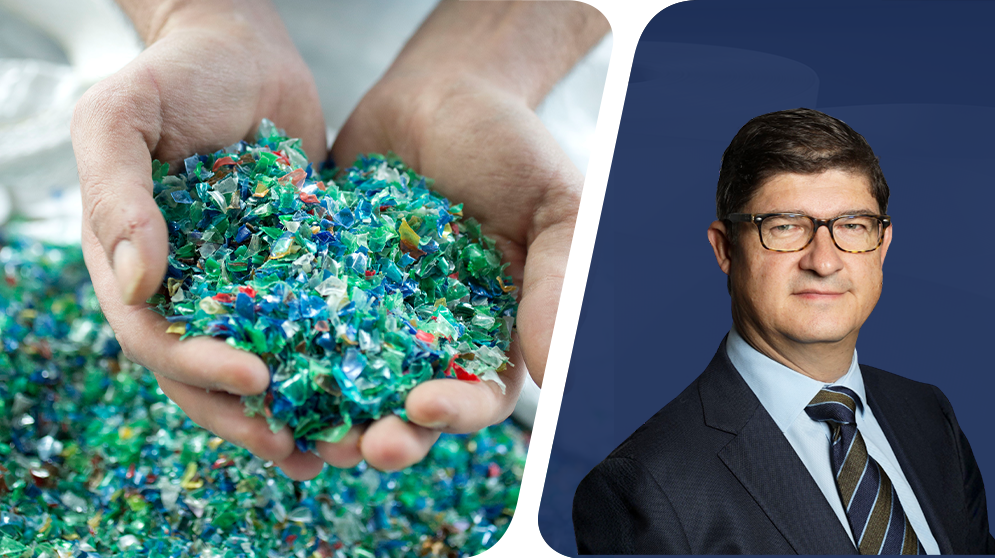
For customers working with nonwovens, sustainability is rarely an abstract goal. It’s something that must work under real production conditions - meeting regulatory expectations, supporting performance, andhelping improve environmental outcomes across the value chain.
To better understand how Johns Manville approaches this balance, we spoke with Philippe Bekaert, Global EP Market Strategy and Sustainability Leader, about what customers are asking for today and how JM’s nonwoven materials are designed to support those needs.
Philippe, when customers talk aboutsustainability, what are their main challenges?
Philippe Bekaert: Most customers are navigating several pressures at once. They need materials that perform reliably in demanding applications, while also responding to tighter regulations and growing expectations from their own customers.
What we see very clearly is that sustainability is meaningful only if it integrates smoothly into existing processes. Customers want solutions that help them improve material efficiency, ensure compliance, and maintain stable production. They’re actively looking for more sustainable options, but those options must be proven, consistent, and available at scale.
How does durability factor into sustainability discussions?
Bekaert: Durability is often underestimated. Many of our materials are used in applications where longevity matters - construction, building interiors, composites. A durable, lightweight nonwoven that performs reliably over a long service life can significantly reduce material use, maintenance, and replacement needs downstream.
From a customer perspective, that translates into lower lifecycle impact and better overall efficiency. Sustainability doesn’t stop at the roll leaving our plant; it continues through the entire application.

Customers increasingly ask for concrete data. Howdoes Johns Manville address that?
Bekaert: Data is key. Customers need facts they can work with, not general promises. That’s why we provide product‑specific environmental information, for example through LCA fact sheets, so customers can assess impacts in the context of their own products and reporting requirements.
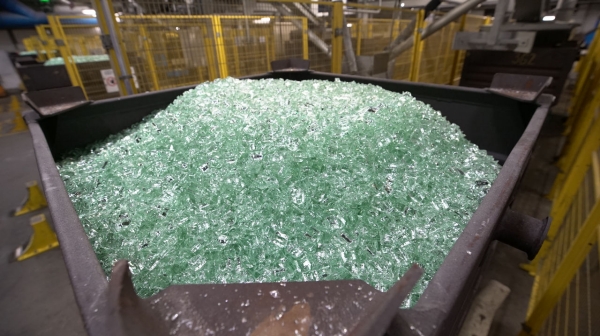
We also make specific, measurable characteristics transparent. In our fiberglass nonwoven portfolio, this includes up to 20% post‑industrial recycled glass content and the fact that 99.5% of the portfolio is manufactured with no intentionally added PFAS. Formaldehyde content is below labeling thresholds, which is important for many regulated applications.
What about polyester nonwovens - where do sustainability improvements show up there?
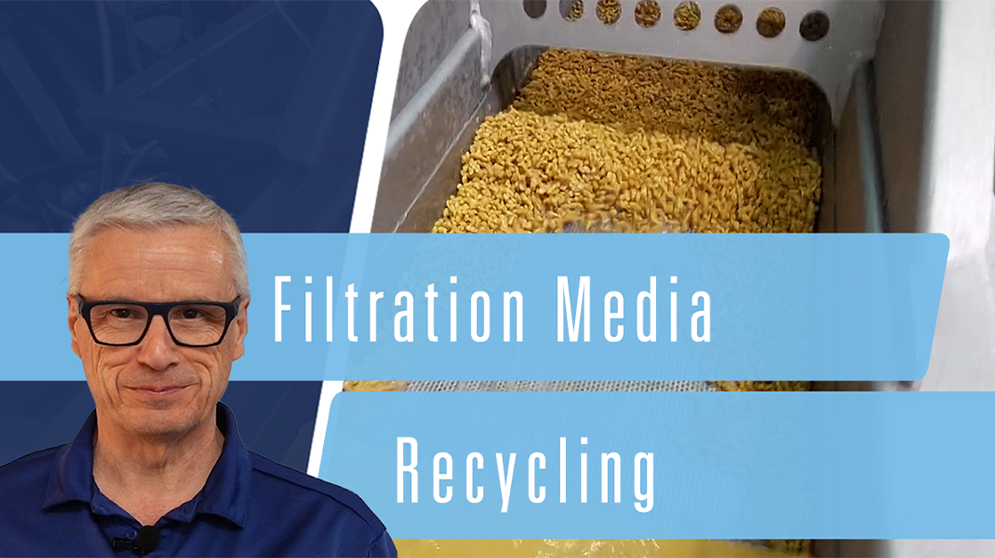
Bekaert: In polyester nonwovens, recycled content is an important lever. Since 2017, we’ve continuously expanded the use of responsibly sourced recycled PET, including post‑consumer bottle flakes, post‑industrial edge trims in closed‑loop production, and recycled PET preforms.
At the same time, we look beyond the material itself. For example, 65% of our polyester nonwoven products are shipped unpacked, reducing packaging use and waste. These are practical measures that customers value because they simplify handling while also reducing material intensity.
How do customers respond to this kind of approach?
Bekaert: Very positively, especially when they see that changes are grounded in production reality. Customers are used to working in complex manufacturing environments themselves. They appreciate when improvements are incremental, well‑controlled, and clearly communicated.
This was also evident in the discussions we had at Techtextil 2026. Many conversations went into detail about sourcing, manufacturing locations, supply reliability, and how sustainability data can be integrated into customer reporting. The focus was less on headlines and more on how materials behave in real applications.
Local manufacturing and supply security often come up in these conversations. Why is that?
Bekaert: Because resilience matters. Local sourcing and manufacturing help reduce transport‑related emissions, but they also provide predictability. For customers, knowing where and how materials are produced - and that supply chains are robust - is part of responsible sourcing.
Our European nonwoven plants operate with certified management systems, including ISO 14001, ISO 50001, and ISO 9001, which supports consistent quality and continuous improvement. That reliability is just as important to customers as any individual sustainability attribute.
Looking ahead, what kind of progress can customers realistically expect?
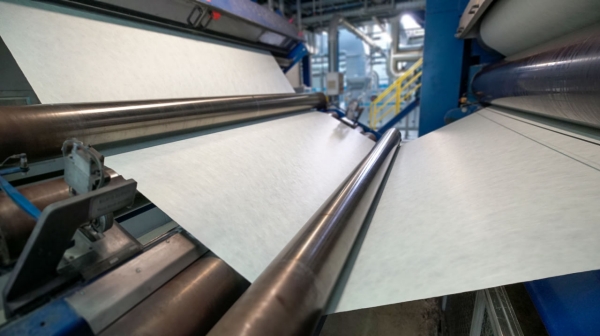
Bekaert: They can expect continued, measurable progress, whether through further evaluation of green energy initiatives, alignment with new EU packaging regulations, or more tailored sustainability insights for specific applications.
But they should also expect openness. Sustainability is not a finished state. It’s a process of improvement that benefits most when it’s developed in close dialogue with customers.
Final question: what role do customers play in shaping JM’s sustainability journey?
Bekaert: A central one. Customers are the ones applying our materials under real‑world conditions. Their feedback, constraints, and goals directly influence where we focus our efforts.
When customers succeed - by improving efficiency, meeting regulatory expectations, and delivering durable products to their markets - that’s when sustainability becomes tangible. Our role is to support that success with materials, data, and long‑term partnership.