Scorching heatwaves, historic drought, shrinking mountain snowpack and drying river basins have pushed the fragile state of Western water supplies to the breaking point this summer. When weather breaks through, it often is via increasingly violent, fast-moving storms that dump sudden rainfall too quickly for parched soils to absorb. In Colorado, regional utilities including Denver Water have implemented mandatory Stage 1 drought rules—restricting lawn watering to just two assigned days per week and prohibiting irrigation between 10 a.m. and 6 p.m. to minimize evaporation. In an era of intense climate volatility, water is no longer just an environmental topic—it is a shared community lifeline and a strategic operational priority.
At Johns Manville, our commitment to environmental stewardship is anchored in our core value to Protect: protecting our employees, our natural resources and the communities where we live and operate.
According to modeling from the World Wildlife Fund (WWF) Water Risk Filter, five JM facilities operate in regions facing high to extreme water scarcity: Willows and South Gate in California; Fernley in Nevada; and our corporate headquarters and research center in Denver and Littleton, Colorado. Operating in these water-stressed river basins means going beyond internal efficiency. We must proactively minimize our impact on local municipal systems.
From the Plant Floor to Facility Grounds: Stewardship in Action
JM approaches water stewardship by treating water as a finite, shared resource across every level of operation:
- Closed-Loop Process Water Recirculation: Across several manufacturing plants, process water recirculation systems continuously treat and reuse water within the facility loop, drastically cutting total intake from local municipal grids.
- On-Site Rainwater Harvesting (McPherson, Kansas): Rather than relying solely on municipal utilities, the McPherson plant captures and stores rainwater on site to offset operational demands, establishing a practical model for alternative water sourcing.
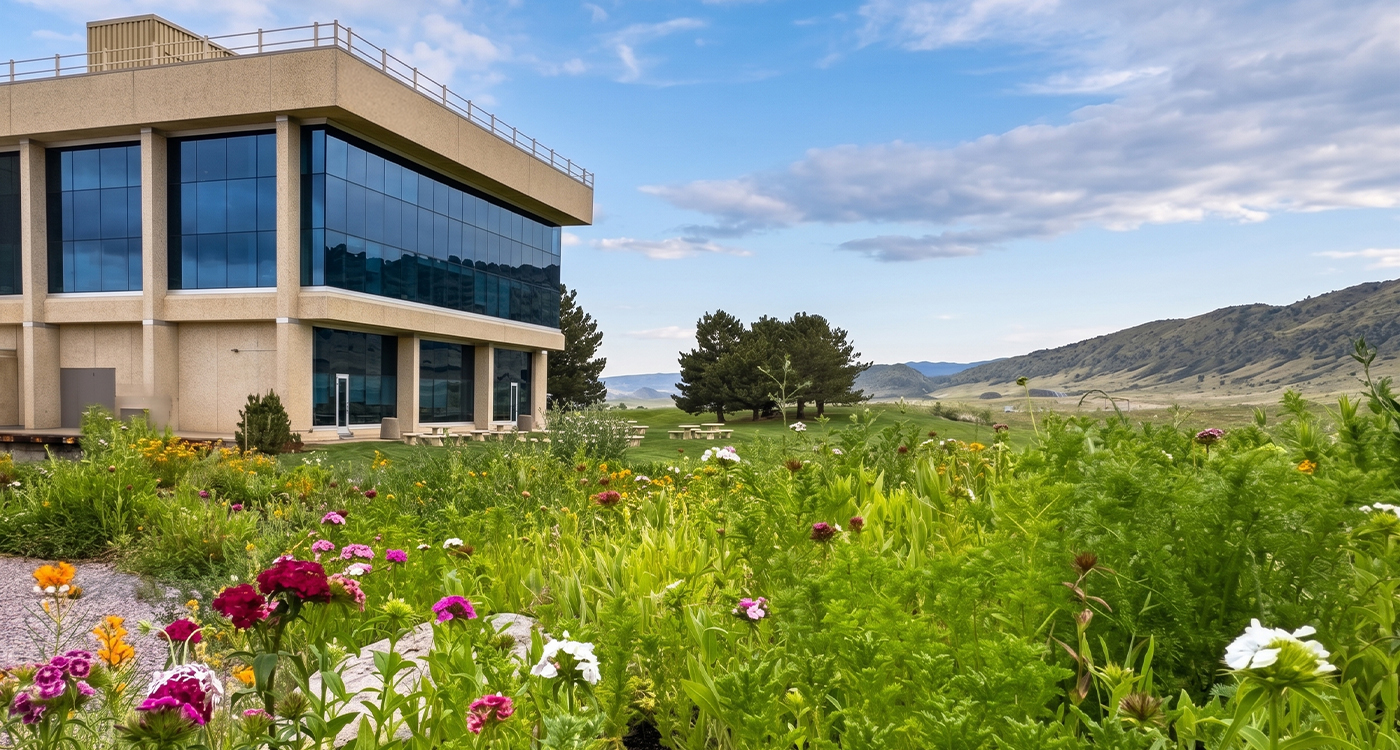
- Smart Xeriscaping at the Technical Center (Littleton, Colorado): Located directly in a high-scarcity Front Range watershed, the JMTC grounds team converted non-functional decorative grass into native, drought-resilient landscaping. Because traditional Kentucky Bluegrass requires 40 to 60 gallons of water per square foot each year, replacing it with deep-rooted Colorado native plants, targeted drip irrigation and moisture-locking mulch reduced landscape water demand in converted zones by 50% to 75% (down to 10 to 15 gallons per square foot). Additionally, when sudden, violent storms hit arid ground, native xeriscaped soils absorb runoff far more effectively than compacted turf, filtering moisture back into the aquifer while preventing local erosion.
Take Action: Five Simple Ways to Conserve Water at Home
Protecting shared watersheds requires everyday action on the job and at home. Curious how you can help? Here are five simple, effective ways to reduce household water use:
- Audit for Hidden Household Leaks: One constantly running toilet can silently waste up to 200 gallons of water every day. Placing a few drops of food coloring in your toilet tank (without flushing) can quickly reveal if water is leaking past the flapper into the bowl.
- Shift Outdoor Watering Times: Water lawns and garden beds only before 10 a.m. or after 6 p.m. Watering during the coolest parts of the day keeps wind and peak sun from evaporating moisture before roots can absorb it.
- Upgrade to High-Efficiency Fixtures: Swapping out older showerheads and faucet aerators for EPA WaterSense-certified models can reduce household water use by thousands of gallons annually without sacrificing water pressure.
- Mulch Around Trees and Shrubs: Adding a 2- to 3-inch layer of natural organic mulch around home gardens lowers soil temperature, blocks weed growth and prevents ground moisture from evaporating during summer heatwaves.
- Use Native Plans and Consider Xeriscaping: Choose native plants and consider replacing water-intense grass in your yard with native flowers, shrubs or ornamental grasses. Because native plants evolved to thrive on local rainfall, once established, xeriscaping can reduce outdoor water use by 50% or more while creating a refuge for local pollinators.
By combining manufacturing plant engineering with practical property care, JM demonstrates that living our Protect value strengthens our business resilience while safeguarding vital Western water supplies for future generations.